
There are two versions of this post: the input and the output, but you may open only one, and the moment you choose, the other is destroyed forever, with no undo and no second look. Choose what you truly value, because you can’t read both.
Hint: Option 2 is technology handing me my words back: clean, correct, and effortless. What you’ll admire there is exactly what I wanted to say… said better than I could have said it myself, and that is precisely what it quietly took. Can you find the hidden message in Option 1, between the raw prompts and the typos? Choose the machine, and you will read the perfect blog post, but you’ll destroy the real message. So, will you dig for the hidden message, or settle for the perfect one?
Warning: this post has been written by a human and contains mistakes.
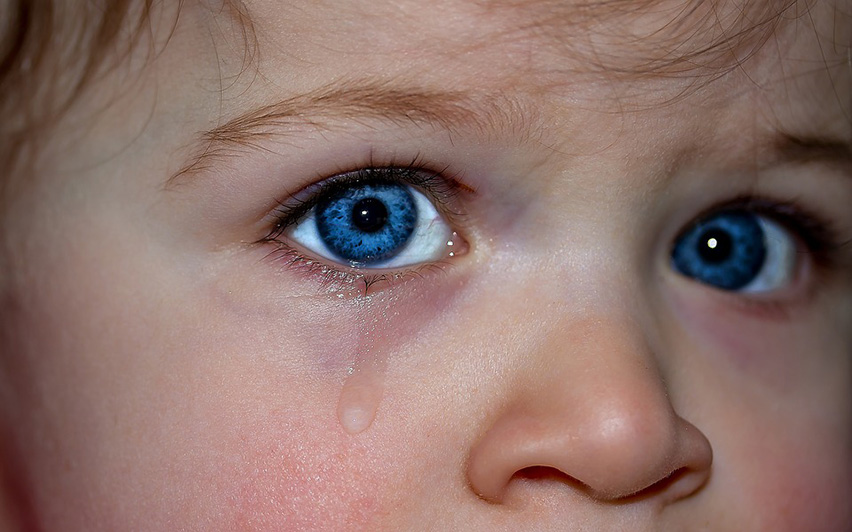
I still remember two events at primary school: (1) for my birthday I reveived a fountain pen (vulpen in Dutch) from our neighbours and I was so happy with it, I used it at school for all my work; (2) some time later, I was no longer allowed to use the vulpen for making the spelling dictations at school because the teacher could not read what I had written. For those of you who are not familiar with a fountain pen, the ink will bleed if water falls on it, for example tears.
Only many years later, I was diagnosed with dyslexia but by that time I had learned to use many tricks (or skills) to survive. For example, I embraced technological developments and was an early adaptor of the spellcheck in word. For the 200+ scientific papers I wrote, I asked my mother/wife/friendly collegues, relied on co-authors (to whom I explicitely explained the situation), or hired professional language editors. When more advanced tools became available, such as Grammarly and DeepL, I could finaly write my own texts for emails and papers, and I was extremely proud I could finally move beyond my dependency on others!
[The following paragraph has been improved with DeepL and Grammarly]
Fast forward to 2020, my inaugural lecture was jokingly titled “Machines Replacing Scientists”. During the reception, we laughed a lot about the idea that this would never happen - haha. At the same time in our AI lab, we were working on AI models to improve literacy screening, resulting in the successful screening open-source software ASReview, but always AI supporting experts, never replacing them.
--
[Dear ChatGPT, I have dyslexia; can you improve the following text and teach me what I did wrong?]
With the release of GPT2.0 (check if this was the first version) suddenly many more people realized the power of languge models to assist us. One other advantage was that I could even write texts more efficient using ChatGPT and could learn more about the grammar rules.
--
[Hi ChatGPT, use the 42 document I have written before as context to mimic my own writing style and improve teh following text].
My understanding of grammar improved and write texts as a native speaker. But soon I skipped the explaination part, because language models tend to be wordy, and why bother with the explaination, because it is the output that matters, right!?
--
[Hee Chat, improve the text and i will give you a reward: a lolly - o, and don't bother explaining what I did wrong; it is no longer a requered skill to write perfect, not even for prompting].
So, I could produce more texts higher quality mimicing my own style, and at the same time the models became better and better and better. One thing that happened is a significant increase of my quality of life an happyness scores (p’s<.05)
--
[put following text in full sentences and extend]
more results and higher effeciency more advanced projects, mastered new skills, started projects I would have never started
--
[add three more arguments and add conclusion]
human input is no longer required...
~~~ Opening the other version is now strictly forbidden — you made your choice!! Or are you curious about the conclusion and take-home message? Reading the other text is at your own risk, because the conclusion is perfect in line with what I could write, but did I? ~~~
I still remember two events from primary school: (1) for my birthday, I received a fountain pen (vulpen in Dutch) from our neighbors, and I loved it so much I used it for all my work; (2) some time later, I was banned from using it for the spelling dictations at school, because the teacher could not read my writing. For those unfamiliar with a fountain pen: the ink bleeds when it gets wet, for example, with tears.
Only years later was I diagnosed with dyslexia, but by then I had learned enough tricks (or skills) to survive. I was an early adopter of the spellcheck in Word. For the 200+ scientific papers I wrote, I leaned on my mother/partner/friendly colleagues, on co-authors I had explicitly told, or on professional editors. When better tools arrived, I could finally write my own emails and papers, so proud to move beyond my dependency on others!
My inaugural lecture was jokingly titled "Machines Replacing Scientists." At the reception, we laughed about the idea that this would never happen. Meanwhile, in our AI lab, we built models to improve literature screening — the work that became the open-source software ASReview — but always AI supporting experts, never replacing them.
With the release of ChatGPT in late 2022, many more people suddenly saw the power of language models to assist — or replace — scientists. For me, another gift: I could write more efficiently, finally learning the grammar rules I'd struggled with for years — until I could write almost like a native speaker.
But soon I started skipping the explanation part. Language models tend to be wordy, and — why bother, when it is the output that matters, right!? So I thrived, mimicking my own style. One result: a significant increase in my quality-of-life and happiness scores (p < .05).
I saw more results and higher efficiency, mastered new skills, and took on work I'd never have dared to begin. I could write in the moment, not waiting days for someone to find time. I stopped avoiding the tasks I used to dread — the difficult email, the harsh reviewer, the grant resubmission. Most of all, the shame I'd carried since that classroom with the leaking fountain pen began to fade: my ideas were finally judged on their content, not on my spelling.
If there is one thread running through my life, it is this: whenever a new tool appeared, I embraced it. The spellcheck in Word, DeepL, Grammarly, and now large language models — each one quietly removed a wall that dyslexia had built around me. I was rarely the one waiting to see whether a technology would prove itself; I was the one reaching for it, because I needed it.
So — do machines replace scientists? For me, the honest answer runs the other way: technology did not make me less of a scientist; it made me more of one. Yes, somewhere along the line I stopped reading the explanations — but I would embrace these tools again in a heartbeat. They turned my biggest weakness into a non-issue and freed my energy for the ideas that actually matter. "Machines Replacing Scientists" was never a warning to fear the machines, but an invitation to welcome them — and to help shape how they support us.
Take-home: embrace new technology early, especially the parts that intimidate you. You don't have to master a tool before you start — you learn it by using it. And if something has ever made you feel held back — the way a leaking fountain pen once did for me — then the right tool, adopted without shame, can set you free.
~~~ Opening the other version is now strictly forbidden — you made your choice!!! Or are you curious for the input I provided to write the conclusion and take-home message? If you decide to find out, be warned: reading the input is entirely at your own risk... ~~~
To be continued, as I haven’t shared the entire story yet…